
Cats are curious, playful, and love having dedicated spaces to scratch, climb, and rest. While store-bought cat furniture can be expensive, creating your own DIY cat furniture is a cost-effective and rewarding way to enrich your cat’s environment. With some creativity, safe materials, and a few tools, you can craft furniture that both you and your cat will love. This guide will walk you through easy, safe, and practical DIY projects to keep your furry friend happy and healthy.
Why DIY Cat Furniture?
DIY cat furniture offers several advantages over commercially available options:
-
Cost-Effective: Making furniture at home allows you to save money while customizing designs to your space and your cat’s needs.
-
Customization: You control the size, materials, and features, ensuring the furniture suits your cat’s preferences and your home décor.
-
Safe Materials: Using non-toxic, durable materials ensures your cat’s safety, avoiding cheap products with harmful chemicals.
-
Engagement and Fun: Cats enjoy exploring new furniture, and DIY pieces often include interactive elements like tunnels, climbing posts, and dangling toys.
By creating your own furniture, you’re not just saving money—you’re also providing a stimulating and enriching environment for your feline companion.
Essential Safety Tips for DIY Projects
Before starting any project, consider the following safety measures:
-
Choose Non-Toxic Materials: Avoid treated wood, paint, or adhesives that could harm your cat. Opt for untreated wood, natural fabrics, and pet-safe glue.
-
Sturdy Construction: Ensure all platforms, posts, and attachments are stable to prevent tipping or collapsing.
-
Smooth Surfaces: Sand any rough edges to prevent splinters or scratches.
-
Secure Scratching Areas: Sisal rope or durable cardboard is ideal for scratching posts; avoid materials that may fray dangerously.
-
Supervised Introduction: Monitor your cat when first using new furniture to ensure safety and comfort.
Easy DIY Cat Furniture Projects
Here are some fun and practical projects you can create at home:
1. Sisal Scratching Post
Materials Needed: Solid wooden post, sisal rope, screws, heavy base.
Instructions:
-
Secure the wooden post to a heavy base for stability.
-
Wrap sisal rope tightly around the post, securing with pet-safe glue or staples.
-
Add a small platform or perch on top for your cat to rest.
A sisal scratching post satisfies your cat’s natural scratching instincts while strengthening their claws and providing exercise.
2. Cardboard Tower or Lounge
Materials Needed: Corrugated cardboard, craft knife, non-toxic glue, soft fabric (optional).
Instructions:
-
Cut cardboard sheets into desired shapes (discs, rectangles, or tunnels).
-
Stack and glue the pieces to create a tower or tunnel.
-
Cover platforms with fabric for comfort if desired.
Cardboard towers are inexpensive, lightweight, and cats love the texture for scratching and hiding.
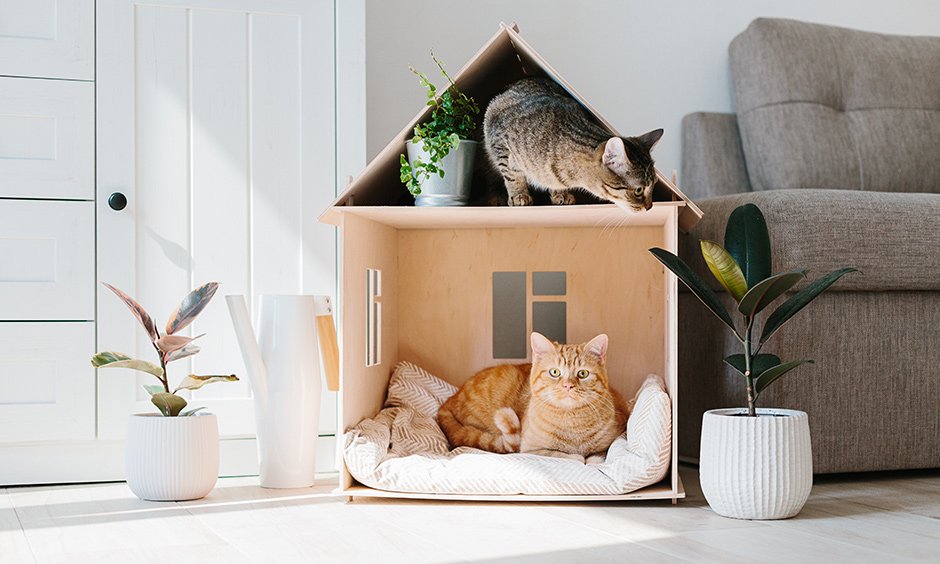
3. Upcycled Wooden Crate Bed
Materials Needed: Wooden crate, sandpaper, cushion or blanket.
Instructions:
-
Sand the crate to remove rough edges.
-
Place a soft cushion or folded blanket inside.
-
Position the crate in a cozy, quiet corner.
This project provides a snug hideaway for cats who enjoy privacy while reusing materials creatively.
4. Branch-Based Climbing Tree
Materials Needed: Sturdy branch, plywood base, sisal rope, fabric.
Instructions:
-
Secure the branch to a plywood base to ensure stability.
-
Wrap portions of the branch with sisal rope for scratching.
-
Add platforms or perches using fabric or wood.
A natural branch tree encourages climbing and exploration, providing both physical and mental stimulation.
5. Wall-Mounted Cat Shelves
Materials Needed: Wooden boards, brackets, screws, carpet or fabric.
Instructions:
-
Attach brackets to the wall securely.
-
Place wooden shelves on the brackets.
-
Cover shelves with carpet or fabric for comfort and traction.
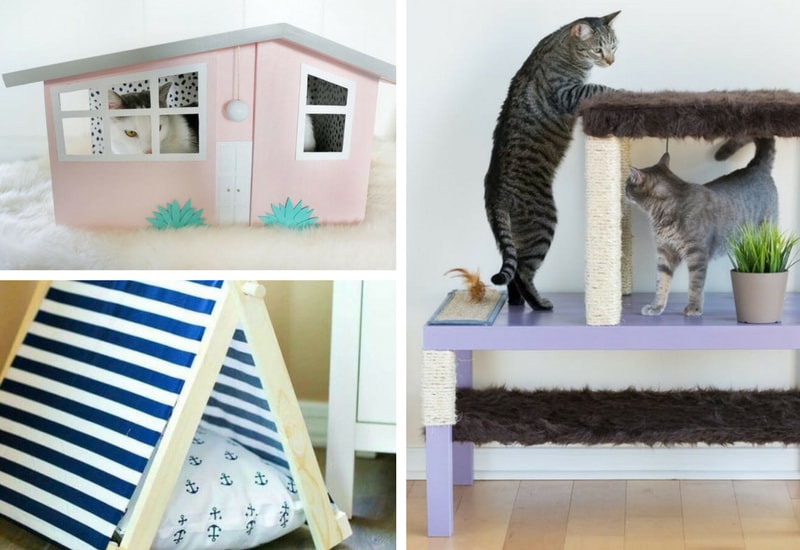
Wall-mounted shelves save floor space and give cats vertical exploration opportunities, satisfying their natural climbing instincts.
6. Ladder Scratch Post
Materials Needed: Small wooden ladder, sisal rope, glue or staples.
Instructions:
-
Wrap the ladder legs with sisal rope, securing tightly.
-
Place toys or hanging elements near the ladder for added engagement.
This design combines scratching with playful climbing, offering a compact solution for small spaces.
Benefits of DIY Cat Furniture
DIY cat furniture is not only cost-effective but also has several benefits for your cat:
-
Mental Stimulation: Climbing, scratching, and exploring new designs keep your cat mentally active.
-
Physical Exercise: Multi-level platforms, ramps, and climbing areas help maintain healthy muscles and joints.
-
Reduced Destructive Behavior: Providing dedicated scratching and climbing areas prevents damage to furniture.
-
Bonding Opportunity: Building furniture together encourages interaction and strengthens the bond between you and your cat.
FAQ: DIY Cat Furniture
Q1: Is DIY furniture safe for kittens?
A1: Yes, but ensure ramps and platforms are low, and materials are secure. Always supervise kittens when introducing new furniture.
Q2: How do I encourage my cat to use DIY furniture?
A2: Sprinkle catnip, place treats on platforms, or use toys to guide your cat toward the new furniture. Positive reinforcement works well.
Q3: Can DIY furniture replace commercial cat furniture entirely?
A3: Absolutely. Well-designed DIY furniture can offer the same functionality, safety, and comfort as store-bought options.
Q4: How often should DIY furniture be inspected?
A4: Regularly check for wear and tear, loose screws, or fraying rope to ensure ongoing safety.
Q5: Can DIY projects be adapted for multiple cats?
A5: Yes. Modular designs, multiple platforms, and separate resting areas help accommodate several cats comfortably.
Conclusion
DIY cat furniture is an excellent way to provide your furry friend with a safe, stimulating, and comfortable environment without spending a fortune. From sisal scratching posts and cardboard towers to upcycled crates and wall-mounted shelves, these projects are practical, creative, and fully customizable.
By prioritizing safety, durability, and your cat’s preferences, you can build furniture that not only meets their physical and mental needs but also complements your home. With a little effort, patience, and imagination, DIY cat furniture becomes a rewarding solution that enriches your cat’s life and strengthens the bond between you and your pet.
Start with a simple project today, and watch your cat explore, scratch, climb, and lounge in the furniture you made with love.