
Bathing a cat can seem like a daunting task for many pet owners. Unlike dogs, cats usually dislike water, and attempting to bathe them without preparation can lead to a stressful experience for both you and your feline friend. However, there are safe and effective techniques that make the process smoother and even manageable for first-time groomers. With patience, the right approach, and an understanding of your cat’s behavior, bathing can become a positive and stress-free part of your grooming routine.
Understanding Why Cats Dislike Water
Cats are naturally cautious animals, and many have an aversion to water because it is unfamiliar or uncomfortable. Their fur is designed to stay dry, and wet fur can feel heavy and cold, which adds to their anxiety. Some cats have had negative experiences with water in the past, reinforcing their fear. Understanding that a cat’s resistance is instinctual helps you approach bathing with empathy rather than frustration. A calm, slow, and consistent approach is essential to ensure your cat feels safe throughout the process.
Preparing for the Bath
Preparation is key to a stress-free cat bath. Begin by gathering all necessary supplies before bringing your cat into the bathing area. You will need cat-safe shampoo, a towel, a non-slip mat, a small cup or gentle sprayer, and possibly a grooming brush for pre-bath preparation. Having everything ready helps prevent sudden movements and keeps your cat calm. Choose a warm, quiet space where your cat feels secure. Avoid loud noises or other pets in the room, as these can increase anxiety.
Brushing Before Bathing
Brushing your cat before a bath is an essential step that often gets overlooked. Removing loose hair, tangles, and mats ensures the bath is more effective and prevents additional stress during washing. Long-haired cats, in particular, require careful detangling to avoid pulling on the fur while it’s wet. Even short-haired cats benefit from brushing, as it reduces shedding and helps distribute natural oils throughout the coat. Taking the time to brush before bathing makes the process quicker and less stressful.
Using the Right Bathing Technique
When it comes to bathing, using gentle and controlled techniques is crucial. Fill the sink or bathtub with just a few inches of lukewarm water—enough to wet your cat’s paws and coat without causing panic. Avoid submerging your cat completely, as this can heighten stress. Wet the fur gradually, starting from the neck down, while speaking in a soothing voice. Apply a small amount of cat-safe shampoo and lather gently, taking care to avoid the eyes, ears, and nose. Rinse thoroughly using a cup or gentle sprayer to remove all soap residue, as leftover shampoo can irritate your cat’s skin.
Keeping Your Cat Calm
During the bath, maintaining a calm environment is essential. Speak softly, move slowly, and use reassuring touches to help your cat feel safe. Some cats respond well to treats during or after the bath, reinforcing positive behavior. If your cat becomes too stressed, it’s better to pause and try again later rather than forcing them through the process. Gradually building tolerance over multiple sessions can help your cat become more comfortable with bathing in the long term.
Drying Your Cat Safely
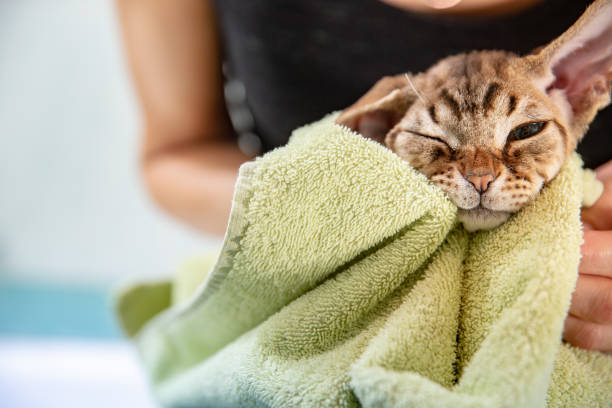
Drying is a critical step that requires attention and patience. Immediately wrap your cat in a soft towel, gently patting the fur to remove excess water. Avoid vigorous rubbing, as this can be uncomfortable and tangles the fur. Some cats tolerate a low-heat or cool setting on a hair dryer, but many prefer air drying in a warm, draft-free room. Ensuring the cat is fully dry is important to prevent chills and skin irritation. Long-haired cats may require additional brushing after drying to maintain a smooth, tangle-free coat.
Alternative Cleaning Methods
If your cat is particularly fearful of water, alternative cleaning methods can help maintain hygiene without full baths. Cat grooming wipes or damp cloths can clean dirty areas effectively. Dry shampoos designed for cats can also reduce odor and remove loose hair. Regular brushing and spot cleaning often reduce the need for frequent full baths, keeping both your cat and your home cleaner with less stress for your pet.
Establishing a Bathing Routine
Consistency is key to reducing anxiety over time. Cats benefit from predictable routines, so scheduling baths at regular intervals can make the experience more familiar. For most cats, a full bath is rarely needed; long-haired cats may require more frequent attention, while short-haired breeds may only need occasional bathing. Observing your cat’s response during each session allows you to adjust your technique and create a stress-free routine that works for both of you.
FAQ Section
How often should I bathe my cat?
Most cats do not need frequent baths because they groom themselves. Long-haired cats or cats that get particularly dirty may benefit from bathing once a month, while short-haired cats may only need baths occasionally.
What type of shampoo is safe for cats?
Always use a shampoo specifically formulated for cats. Human or dog shampoos can irritate a cat’s sensitive skin and upset their natural pH balance.
How can I reduce my cat’s fear of water?
Start slowly by introducing water in small amounts, allowing your cat to explore it at their own pace. Use gentle, calm movements and reward with treats or affection to reinforce positive associations.
Can I use a hair dryer on my cat?
Only if your cat tolerates it. Use the lowest heat and speed settings, keeping the dryer at a safe distance. Many cats prefer air drying in a warm, draft-free room.
Is it safe to bathe a cat with long fur at home?
Yes, with proper preparation, gentle techniques, and patience. Pre-bath brushing and careful drying afterward are especially important for long-haired cats to prevent mats and tangles.
Conclusion
Bathing a cat at home doesn’t have to be a stressful ordeal. By understanding your cat’s behavior, preparing the right environment, and using gentle techniques, you can make the process safe and effective. Regular brushing, careful bathing, and consistent routines not only maintain your cat’s hygiene but also strengthen the bond between you and your feline companion. With patience and practice, even the most water-averse cats can learn to tolerate—and sometimes even enjoy—bath time.